
Dark Side at 30
Traduction de l’article Dark Side at 30 paru dans le Rolling Stone n°922 de mai 2003 pour le trentième anniversaire de The Dark Side of the Moon. C’est une série de trois interviews de Roger Waters, David Gilmour et Alan Parsons.
Roger Waters
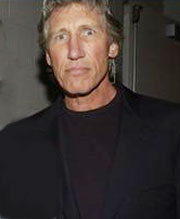
Après que Syd Barrett se soit enfoncé dans la folie, Roger Waters est devenu la nouvelle force motrice de Pink Floyd. De Dark Side of the Moon jusqu’à The Final Cut, il a écrit 95% des paroles et a mis au point les concepts sur lesquels reposent les albums. Malgré la séparation difficile du groupe en 1987, il est en bons termes avec Rick Wright et Nick Mason, mais n’a toujours pas renoué avec David Gilmour.
Dark Side Of The Moon est en partie fondé sur le thème de la folie. Était-ce l’idée depuis le départ ?
Ouais, je le pense. Il y a un reste de Syd dans tout ça. Au début, Syd était la principale force créative alors sa chute dans la schizophrénie a été un énorme coup. Alors quand tu vois ça arriver à quelqu’un dont tu as été un ami très proche que tu as connu plus ou moins toute ta vie, ça fait réaliser combien les capacités mentales et les sensibilités peuvent être éphémères. Ça aurait tout à fait pu tomber sur moi. Il est question de cela dans Brain Damage.
Vous avez dit par le passé que votre style d’écriture, assez direct, sur Dark Side of the Moon était influencé par l’album de John Lennon/Plastic Ono Band de 1970.
Je pense juste que c’est un des grands moments dans l’histoire du rock’n roll, ou même dans l’histoire des tous les écrits. C’est un travail remarquable. Qui sait ? Il avait peut-être trouvé le moyen de faire passer quelque chose d’une puissance égale à ce qu’il avait vécu. C’est tellement brut. Quand tu es jeune, il y a certains disques qui t’emportent ailleurs et qui donnent envie d’essayer de faire quelque chose. Ce disque est l’un de ceux-là. Un autre était le premier album de The Band. Ça a complétement changé ma vision à propos des enregistrements. Également Pet Sounds et Sgt. Pepper.
Que vous rappelez vous de l’écriture de Money ?
Bien qu’elle soit basée sur un ligne de basse, je l’ai écrite sur une guitare acoustique. Je jouais des trucs et Dave disait « Non, ce n’est pas bon, il manque un temps. Ça ne fait que 7 ». Je lui ai dit « Ben c’est comme ça ». Plusieurs de mes chansons ont des mesures impaires. Quand vous jouez Money sur une guitar acoustique, ça sonne très blues. C’est comme ça qu’elle était sur la démo. Il y a une touche très bluesy.
Et comment vous est venu l’idée des boucles sonores sur ce morceau ?
J’ai fait ces enregistrements dans un cabanon au fond du jardin, en lançant des pièces de monnaie dans un gros bol industriel que ma femme utilisait pour mélanger de l’argile. J’ai enregistré ces effets sonores sur mon premier enregistreur à bandes. Je les ai découpés et collés ensembles puis j’ai fait passer ça dans la machine, avec un pied de micro pour tenir la bande, et c’était parti.
Quel est votre souvenir de l’enregistrement de The Great Gig in the Sky ?
C’était quelque chose que Rick avait déjà écrit. C’est un super enchaînement d’accords. The Great Gig in the Sky et la partie de piano sur Us and Them sont, de mon point de vue, les meilleures choses qu’a pu faire Rick. Elles sont toutes les deux très jolies. Et Alan [Parsons] nous a suggéré le nom de Clare Torry. Je ne sais pas de qui était l’idée d’avoir du chant là-dessus. Clare est venue dans le studio un jour et on lui a dit : « Il n’y a pas de paroles. C’est à propos de la mort. Adapte ton chant là-dessus, ma petite ». Je crois qu’elle n’a fait qu’une seule prise. Et on a tous dit « Ouah, c’est dans la boîte ! Voilà tes 60 livres ». Plusieurs années après, j’ai déménagé et elle habitait juste au coin de la rue. Je la croisais tout le temps, en train de promener son chien.
C’était votre idée d’enregistrer les fragments de voix que l’on retrouve dans tout l’album ?
Je trouvais que c’était une idée géniale ! J’ai écrit les questions sur un jeu de cartes, dans un ordre précis. N’importe qui dans l’immeuble venait et y prenait part. Ils lisaient la carte du dessus et répondaient, sans personne d’autre dans la salle, puis ils prenaient la suivante. Donc, par exemple, quand ça disait « Quelle était la dernière fois où vous avez été violent ? », la suivante disait « Etiez-vous dans votre droit ? ». Ça a mis une touche essentielle aux enregistrements. Les questions qui donnait les meilleurs résultats était celles à propos de la violence.
A propos de votre relation avec Dave Gilmour, que pensez vous de la théorie qui dit que votre apport était basé sur l’organisation des idées et la structure, et qu’il contribuait avec sa musicalité instinctive ?
C’est des conneries. Il n’est pas concevable que Dave ai besoin d’un moteur pour sortir son meilleur jeu de guitare. C’est un grand guitariste. Mais cette idée qu’il a essayé de faire passer au fil des ans, qu’il est quelqu’un de plus musical que moi, c’est une connerie absolue ! C’est une notion absurde, mais les gens se plaisent à croire ça.
Comment vous sentiez-vous en voyant l’album remporter tant de succès ?
On en était très content, mais pas surpris. Il est arrivé dans les charts américains assez rapidement. On été en tournée dans les States à ce moment-là. Il était clair que ça allait être un album important, surtout quand les radios locales et nationales ont adopté Money. A partir de ce moment-là, ça allait être un gros succès.
Comment votre vie a changé ?
En étant honnête, je dois accepter qu’à ce moment-là, je suis devenu un capitaliste. Quand d’un coup tu te fais plein d’argent, tu dois choisir si tu le redistribues aux pauvres gens ou si tu l’investis. J’ai décidé de donner une partie aux pauvres et d’investir le reste. Je faisais face à ce dilemme, venant de la classe sociale où j’ai grandi. Je ne pouvais plus prétendre que j’étais un vrai socialiste, mais 25% de mon argent est allé aux œuvres de charité, que je continue de soutenir aujourd’hui. Je ne fais pas une chanson pour danser dessus. Une des bonnes choses en étant capitaliste, c’est que tu deviens philanthrope, dans une certaine mesure.
Est-ce que Pink Floyd a fait un autre album aussi bien que Dark Side of the Moon ?
Hé bien je pense que The Wall est aussi bon. Je pense que ce sont les deux grands disques que l’on a fait ensemble.
David Gilmour
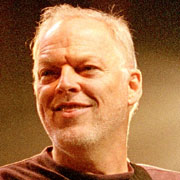
David Gilmour a rejoint Pink Floyd en 1968 pour remplacer Syd Barret. Il a opéré en tant que guitariste principal du groupe, et il en formait avec Roger Waters le noyau créatif. Les deux ne se sont pas parlé depuis la séparation du groupe en 1987
Quel est votre souvenir de la naissance du concept de Dark Side of the Moon ?
Je ne me souviens pas exactement comment c’est arrivé, juste qu’au moment ou Roger est venu et a dit qu’au lieu de travailler une ou deux paroles de chansons qu’on avait déjà, il avait une idée qui serait le fil rouge de l’album. On avait déjà fait ça avant, mais seulement dans une très longue chanson : Echoes sur Meddle, l’album précédent. Elle occupait toute une face de l’album et était issue de l’assemblage de plusieurs petites sections, mais avec des paroles cohérentes. Là c’était une série de paroles différentes qui avaient un thème récurrent.
Que Roger arrive avec une idée cohérente de ce que ça allait être était très bonne chose. On a déjà exploré ce domaine par le passé, lorsque l’on a fait The Man and the Journey, une série de concerts en 1969. C’était l’histoire de la vie d’une personne. Mais je pense que l’on s’est tous dit, Roger en particulier, que la plupart de nos paroles étaient trop indirectes. On avait vraiment le sentiment que les mots seraient très clairs et spécifiques. C’était un grand bond en avant.
Vous avez dit par le passé que votre contribution à l’écriture de l’album n’était pas si terrible…
On a tous un peu des hauts et des bas, et on a des périodes plus créatives que d’autres. En regardant en arrière, à l’époque des sessions d’écriture, je ne carburais pas à plein régime. J’ai aidé à écrire plusieurs chansons, mais je n’ai pas écrit un Comfortably Numb ou un Wish You Were Here pour cet album. Je n’étais pas aussi créatif que j’ai pu l’être. Je crois que j’ai pesé dans le studio, sur la production, le jeu, les arrangements et ce genre de choses. Mais pendant les premières sessions de répétition, quelque chose ne prenait pas.
En y repensant, qu’est ce qui définit votre relation créatrice avec Roger ?
C’est très difficile d’analyser ce qui fait marcher les choses. Roger est un fantastique moteur, et un bon cerveau pour les paroles. C’était la force motrice et créatrice. Et je dirais que j’ai un meilleur sens de la musicalité que lui. Et aussi, je peux chanter juste [rire]
Quand est-ce que ça a commencé à dégénérer ?
Je ne pense pas que notre créativité de groupe se soit arrêtée à l’époque de Dark Side of the Moon. Je pense que Wish You Were Here était un bon album et, dans une certain sens, meilleur que Dark Side of the Moon. Et, bien que ce ne soit pas souvent considéré, on avait une relation de travail très constructive pendant l’écriture de The Wall. Ça s’est écroulé un peu après.
Quels sont vos souvenirs de l’enregistrement de la voix féminine sur The Great Gig in the Sky ?
Clare Torry n’avait pas vraiment le physique de l’emploi. C’était une idée d’Alan Parsons. On voulait y mettre une fille, criant de façon orgasmique. Alan avait déjà travaillé avec elle auparavant, alors on a voulu voir ce que ça donnerait. Et elle était fantastique. On a du l’encourager un peu. On lui a donné quelques pistes : « Peut-être que tu devrais faire cette partie doucement, et celle-là plus fort ». Elle a fait peut-être un demi-douzaine de prises. Ensuite, on a assemblé toutes les prises pour arriver à ce qu’il y a sur le disque. Ça n’a pas été fait en une seule prise.
A quoi ressemblait-elle ?
A une jolie femme au foyer anglaise.
Un des styles de Pink Floyd qui déclenche peu de commentaires est l’influence R&B que l’on peut entendre sur Money.
J’ai toujours essayé de mettre un peu de ça dans les choses. J’essayais constamment d’apprendre à Nick des nouveaux riffs de batterie et de le pousser à être un peu plus funky. C’est difficile d’être précis sur ce qui nous a influencé, mais j’étais un grand fan de Booker T par exemple. J’avais l’album Green Onions quand j’étais ado. Et dans mon groupe précédent, qui a durée 2 ou 3 ans, on jouait le répertoire des Beatles, des Beach Boys, aussi du Stax et des trucs soul. On jouait Green Onions en concert. J’ai fait quelques trucs de ce style. Je pensais que l’on pouvait incorporer ça dans notre son, sans que personne n’en décèle les influences. Et, selon moi, ça a marché. De petits apprenti-architectes anglais blancs, sympa, et qui deviennent funky, ça a quelque chose de bizarre… et ce n’est pas si funky que ça [rire]
Quand vous avez vu le dessin de la pochette de l’album, est-ce que ça a eu un sens instantanément ?
Oui. Je ne sais pas trop pourquoi mais ça avait du sens. Quand Storm [Thorgeson, le co-designer des Floyd] nous a montré toutes les idées, dont celle-là, il n’y avait aucun doute : c’était la bonne. C’est une couverture géniale. Les premiers émerveillements passés, on peut se dire « Ouais, c’est une idée très commerciale : très simple et pur, ça aura l’air super dans une vitrine de magasin ». Ce n’était pas une une vague photo de quatre potes gambadant dans la campagne. Et ça ne nous a pas échappé.
Comment avez-vous ressenti le succès énorme de l’album ? Étiez-vous surpris ?
Oui je l’étais. Je savais qu’on passait à la vitesse supérieure, mais personne ne pouvait prévoir de telles ventes et une telle longévité dans les charts. Les mois défilaient et il restait là, en tête du classement. A un moment, après sa sortie initiale, il a disparu d’un coup, et puis quelque chose s’est passé et il est revenu. C’est un vrai bouche à oreille qui s’est propagé. Et depuis ce temps, il reste là.
Alan Parsons
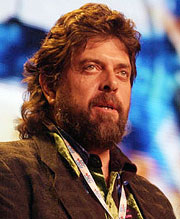
En 1972, Alan Parsons, un ingénieur des studios Abbey Road, était employé pour travailler sur Dark Side of the Moon pour 35£ (environ 50$) par semaine. Surfant sur la vague du succès, il a monté avec succès un groupe de prog-rock, le Alan Parsons Project.
Que compreniez-vous des thèmes latents de Dark Side of the Moon ? Est-ce que le groupe vous les a expliqué ?
Non, pas du tout. En fait, je me suis un peu ridiculisé. Vers la fin de l’enregistrement, j’ai été choisi pour répondre aux questions sur les cartes. Une des questions était « A votre avis, quel est l’idée globale de Dark Side of the Moon ? » Je n’en avais aucune idée. Ma réponse n’était pas assez intéressante pour être utilisée sur l’album. Tout ce que je ressentais c’était que ça parlait des épreuves et des souffrances de la vie. Je ne savais pas que ça parlait particulièrement d’un groupe de rock’n roll. Ça m’a été expliqué plus tard. Je pense que ça parle de la façon dont survit un groupe de rock’n roll, ou pas. A mon avis, c’était un préambule à The Wall.
Quelle était votre regard sur le partenariat Waters/Gilmour ?
C’était très calme, sans grand enthousiasme. Quand quelque chose marchait, ils n’étaient pas du genre à sauter de joie. Après une prise d’un hallucinant solo de guitare, Roger disait « Oh, je pense que ça fera l’affaire, Dave». C’était très modéré.
A quelles heures le groupe avait-il tendance à travailler lorsqu’ils enregistraient l’album ?
Les horaires dépendaient des jours de la semaine. Si c’était une soirée football, on finissait toujours tôt. Si c’était une soirée Monthy Python, pareil. Roger s’intéressait beaucoup au foot. Il jouait pas mal aussi. Il y avait un équipe Pink Floyd. Souvent, ils s’arrêtaient pour regarder Monty Python et me laissaient faire le mixage. C’était très constructeur pour moi. J’ai pu y mettre ma signature.
Dans les années qui suivirent la sortie de l’album, le groupe a parfois diminué votre rôle…
Ça a été variable. Dave a déclaré dans la presse que l’ingénieur du son ne faisait aucune différence, mais quelques mois après il s’est rétracté en disant « Non, Alan a apporté une contribution valable ». Roger a toujours été d’un grand soutient. Je pense qu’ils sentaient que ma carrière allait reposer sur le mix de Dark Side of the Moon, ce qui était un peu vrai. Mais parfois, je me lève le matin assez frustré par le fait qu’ils ont fait des millions avec cet album, et qu’énormément de gens qui y ont participé n’ont pas eu un sou.
En plus de votre travail d’ingénieur du son, quel a été votre apport ?
Les Floyd sont, par leur nature profonde, des expérimentateurs de son. Les Floyd et les Beatles ont beaucoup de choses en commun à ce niveau : ils ont travaillé dans les plus grands studios, avec les meilleurs ingénieurs du son. Et devenir l’ingé son d’un groupe de cette stature, c’était la réalisation d’un rêve. Si un ingénieur du son brille sur un tel album, il se sentira forcément bien ! J’ai agi à l’instinct. Je n’ai pas imposé mes idées, j’ai fait quelques suggestions à l’occasion, ou simplement ce qui me semblait approprié. On travaillait bien ensemble, on formait une vraie équipe.
Que vous rappelez-vous vous de l’enregistrement de The Great Gig in the Sky ? Vous avez trouvé Clare Torry, la voix féminine sur ce morceau.
Elle a fait un album de reprises. Je me rappelle qu’elle avait fait une version de Light My Fire. Je trouvais qu’elle avait une super voix. Quand la situation s’est présentée, ils commençaient à se gratter la tête, en se disant « Qui est-ce qu’on va faire chanter là-dessus ? ». Je leur ai dit « J’ai une idée, je connais une fille ». Elle est venue, et en quelques heures c’était fait. On lui avait dit de chanter sans parole alors elle a commencé a faire des « Oh yeah baby », ce genre de choses. On lui a dit d’arrêter ça mais c’étaient à peu près les seules indications qu’on a donné, elle devait juste le sentir.
L’autre chose qui est arrivée sur ce morceau, c’est qu’on a fait une petite farce à Rick [Wright]. Il était dans le studio numéro 1, en train de jouer sur un des pianos à queue, et le reste du groupe était dans le numéro 2. Au lieu que le groupe joue, on a diffusé une précédente prise. Il ne pouvait pas voir la différence. On a lancé la bande et on s’est faufilé dans le couloir, et quand il a levé les yeux à la fin de la prise, tout le monde était là, devant lui. Il était un peu surpris ! On était une bande de gosses, à se faire des farces.
Que pensez-vous de la légende urbaine qui dit que Dark Side of the Moon est une BO secrète du Magicien d’Oz ?
C’était un type sur une radio américaine qui me l’a fait remarquer. C’est vraiment de la poudre aux yeux. Il y a deux ans, un des enfants de ma fiancée avait une copie de la vidéo, et je pensais que je devrais y jeter un œil. J’ai été très déçu. La seule chose que j’ai remarquée, c’est le « balanced on the biggest wave » qui arrive au moment ou Dorothée marche comme un funambule sur une barrière. Un truc que n’importe quel professionnel du son vous dira c’est que l’ampleur du décalage entre la vidéo et l’audio est énorme. Et de toute façon, en jouant n’importe quel album avec le son de la TV éteint, vous trouverez que ça colle.
Voir aussi
- la page sur The Dark Side of the Moon du livre From Dawn to the Moon
- la chronique de Dark Side of the Moon par MP
Auteur de la page :
ZeZapatiste (traduction),
manu.